Fly Bites and Your GSD

Transform Your Dog’s Behavior.
Transform Your Family’s Life.
Discover the online program that more than 57,000 dog owners have used to rapidly transform their dog into a well-behaved, obedient furry friend.
Fly Bites and Your Dog? There are many different types of flies that may bite your dog.
The common stable fly is the most common cause, but deer flies, black flies and even plain old ordinary houseflies can also bite your dog.
So why do flies do this in the first place? What attracts flies to you dog?
The flies bite the dog to obtain a meal of fresh blood and the tips of the dogs ears as well as the bridge of the nose are prime targets for an easy meal.
These bites most frequently occur in dogs that live near farms with livestock. These biting pests can often cause a common condition in outside dogs called "Fly Strike".
This condition happens whenever a fly lands on the dogs and bites the tips or top surface of the dog's ears. The bridge of the nose is also a very common target for flies because of the thin skin and hair on theses regions. Additionally, the inability of the dog to adequately defend his ears is another reason flies will seek out these tender areas.
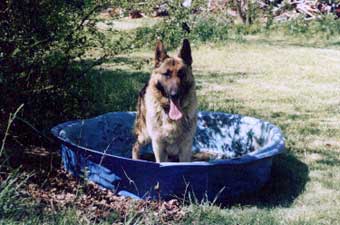
Some dogs may endure hundreds of painful bites a day for weeks at a time. If you happen to see blood spots or flies of any kind congregating near your dog's ears then you can easily assume that flies are biting your dog. Another factor to consider is that these bite wounds attract more flies which may then lay their eggs in the damaged tissue which will later hatch into maggots.
What should I be aware of concerning flies and my dog? Look for painful bumps, sometimes with scabs or bleeding, on the dogs ears, especially around the margin areas. What should I do if I suspect that this has happened to my dog? First, do not underestimate the pain that these flies can inflict on your dog and start treatment at the first sign of fly bites on your GSD.
Gently cleanse the ear or other affected area with warm water and a mild antiseptic soap and apply a topical antibiotic ointment which will help to control any infection which may be present. A mild pain reliever may be needed for a time as well while healing occurs. Antibiotics usually aren't necessary unless the fly bites are severe.
If the bites seem severe, or if any maggots are present, veterinary attention is needed immediately. Additionally, the ear may need to be washed with a wound cleanser (under sedation or anesthesia) if the fly bites are severe. Maggots will be removed if they are present as well as any dead or dying tissue.
How do I keep this from happening to my dog? Prevention is the best treatment for this problem. Applying a topical insecticide to the dog's ears is often the best method of prevention. Pyrethrin or PEMETHRIN and ointments are very effective in repelling flies.
Many people make their own homemade solutions to use on their dogs - many add DEET or Pyrethrin to Petroleum Jelly which they then apply topically to the dogs while outside. Other methods to use are: moving the pet indoors during the heat of the day, spraying the dog's outside living quarters, removing any materials such as fecal material, garbage, uneaten pet food, etc., are also helpful in preventing fly infestation.
Prognosis is generally very good, unless maggot infestation is very severe. The dogs ear may be scarred and remain thickened even after treatment. Remember, the best method in handling fly bites with your dog, is to prevent them from happening in the first place.
Keep your dogs bedding area and coat clean, use the topical insecticides as suggested above and follow the tips for outside dogs mentioned above and you will find that flies will ignore your dog, and best of all, the fly bites will stop. For more information on this subject, contact your veterinarian.
Return from Fly Bites to GSD First Aid Kit
"Recollect that the Almighty, who gave the dog to be companion of our pleasures and our toils, hath invested him with a nature noble and incapable of deceit." - Sir Walter Scott 'The Talisman'
Sign up for promotions, news, discounts, and the chance to win prizes for you and your German Shepherd
